
Phoenix 2
Propulsively Landing Model Rocket
A Step Towards Accomplishing One of KSLS’ Founding Goals
Phoenix 2 is the second rocket in KSLS’ Phoenix Thrust Vector Control family of launch vehicles. Using the lessons learned from Phoenix 1’s development, Phoenix 2 aims to perform a soft propulsive landing.
Launch Pad 2
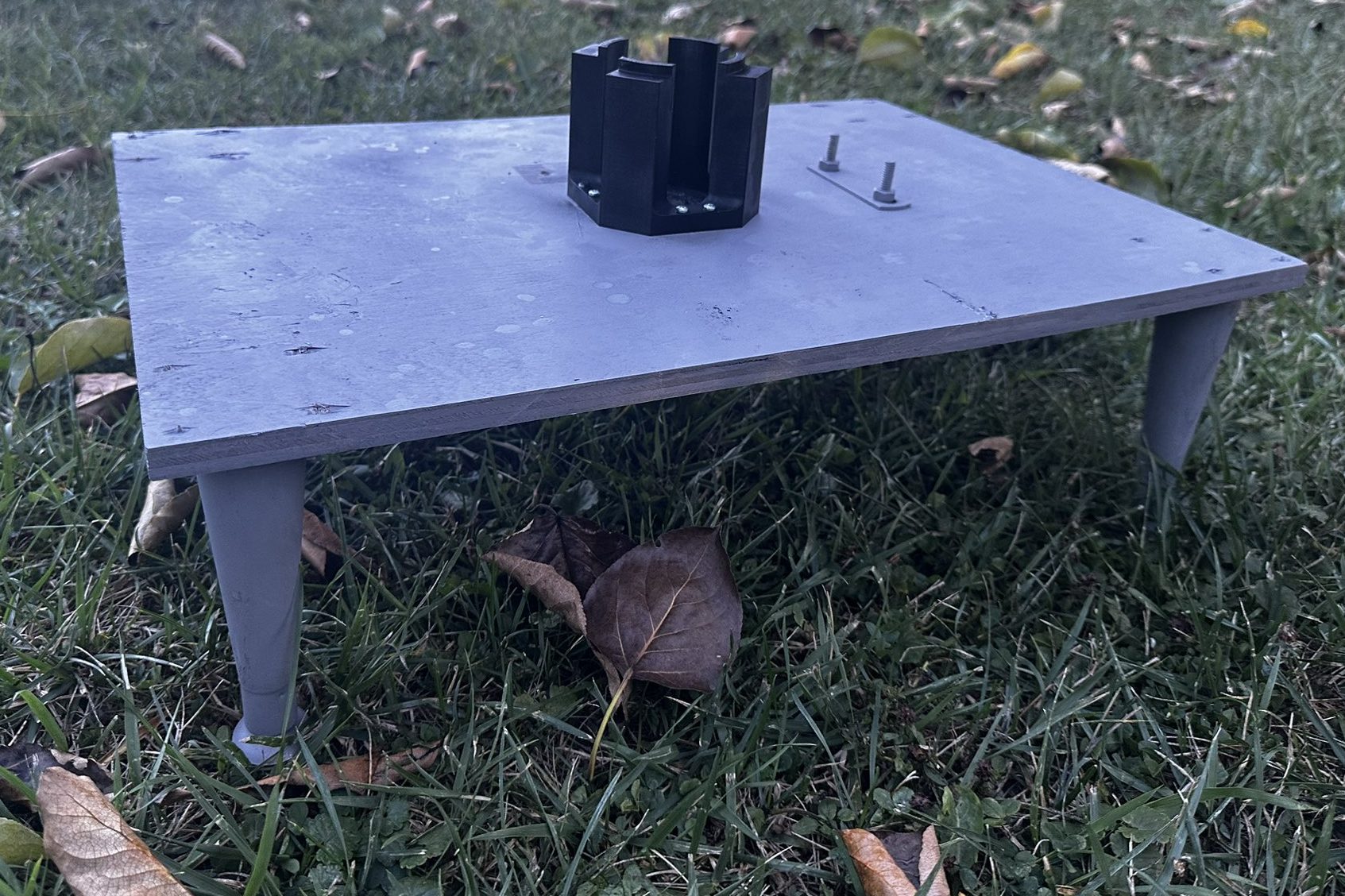
Launch Pad 2 (LP-2) is designed to be configurable to multiple launch vehicles, depending on their needs while on the ground. The Launch Support Tower and original launch mount seen during the Phoenix 1 program were removed for a redesigned launch mount, removing complexity in the rocket’s launch sequence and preflight preparation. It also features a metal flame diverter used to redirect the exhaust from the ascent motor, mitigating fire risks at liftoff.
Ground Testing
Ignition Testing
This test confirms the Blip computer’s ability to ignite the landing motor before flight, mitigating the risk its failure.
Landing Leg Deployment
To softly land, Phoenix 2 needs a large base to land on. Its landing legs are stowed during the ascent phase of flight and must be deployed shortly before landing. To deploy the legs, the BLIP flight computer sends current through a nichrome wire that cuts the rubber band storing the legs, allowing a fast and reliable deployment.
Flight Testing
Landing Test 1: Failed landing motor ignition and landing leg deployment, resulting in total loss of the vehicle.
Landing Test 2: Failed ascent due to roll rates, but successful landing motor ignition and landing leg deployment.
Landing Test 2: Flight Report Coming Soon
Read the full flight reports here: Phoenix 2 Landing Test Reports