
In-house developed Thrust Vector Control Systems
Active Control Systems for Model Rocketry
In June 2024, KS Launch Systems successfully demonstrated a stable ascent of our Phoenix 1 rocket using Thrust Vector Control (TVC). This accomplishment lands Kaden Shannon among one of the few High School students who have developed a working and reliable TVC system. This capability allows us to push the boundaries of model rocketry, first undertaking the goal of softly propulsively landing a model rocket.
Thrust Vector Control Hardware
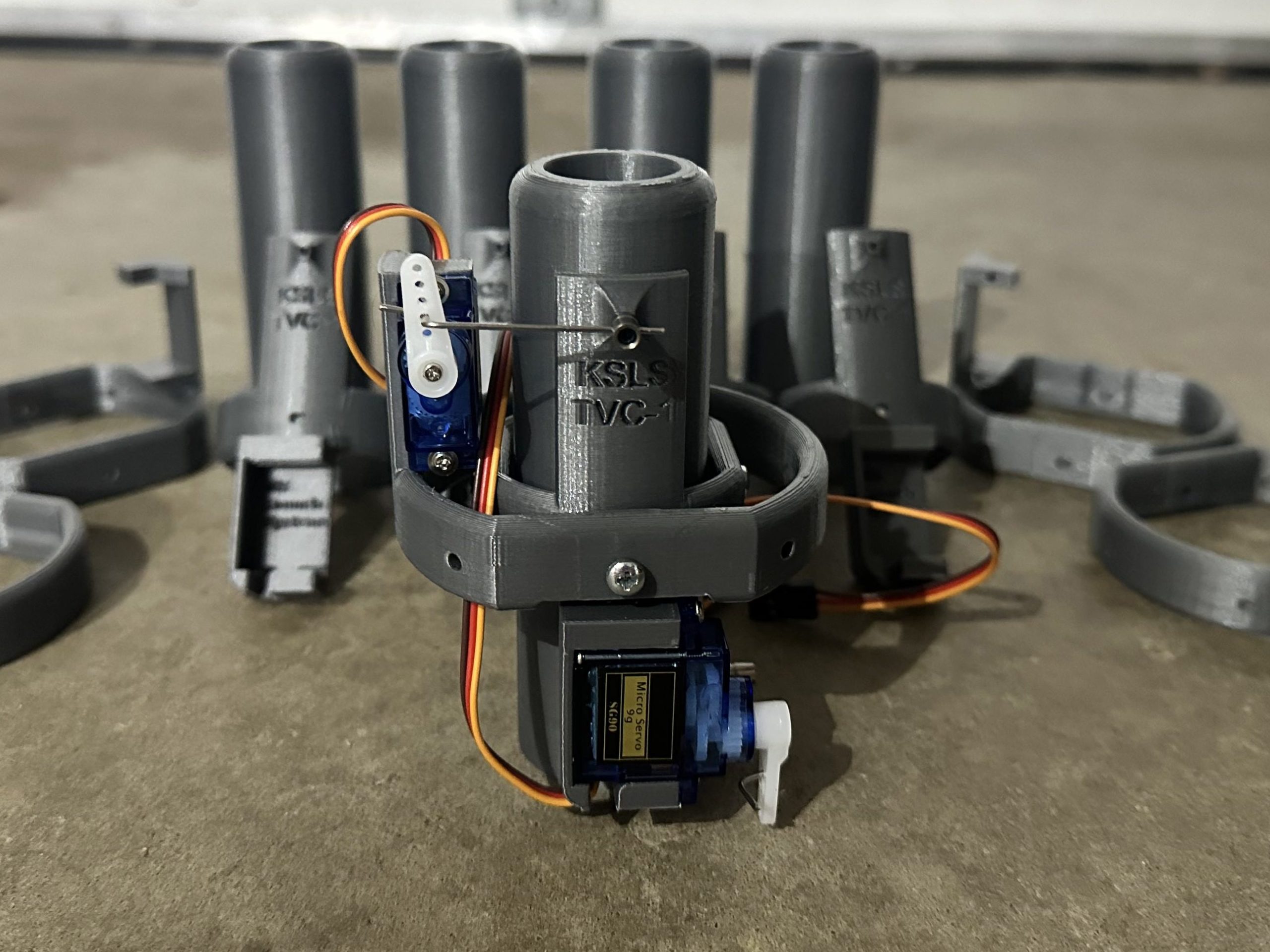
Thrust Vector Control Mount 1
Thrust Vector Control Mount 1 (TVC-1) is the first mount designed by KSLS to gimbal a 29mm motor. TVC-1 was designed from February to May 2023, taking several iterations to remove any errors in the design. The mount can gimbal ± 5° on both the X and Y axis using two SG-90 servo motors. TVC-1 was designed for our Phoenix 1 rocket to learn how to use thrust vector control to control the rocket’s attitude.
Thrust Vector Control Mount 2
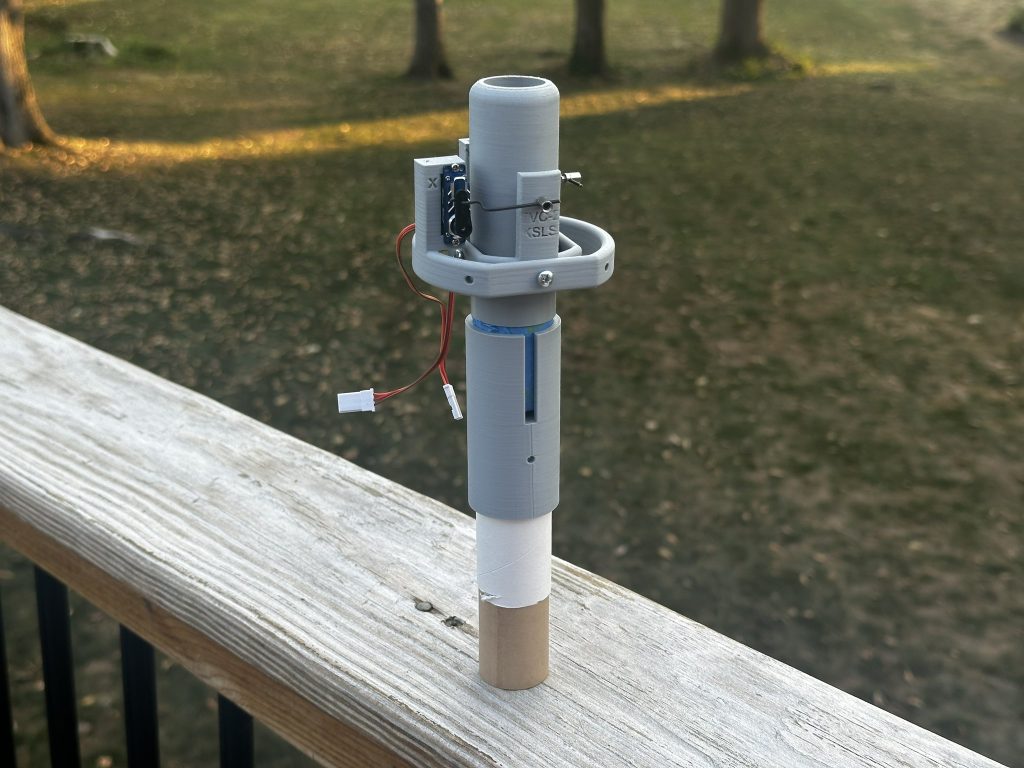
Thrust Vector Control Mount 2 (TVC-2) was designed to expand the capabilities of KSLS’ TVC systems while being more efficient. This mount uses two BMSA10 servo motors to articulate the mount ± 6° on both the X and Y axes. The smaller servos also allow the mount to remain fully inside the airframe of launch vehicles without requiring any cutouts, increasing structural integrity. A shortened sleeve for the motor inside the main part of the mount also allows a coupler section with another motor to be added. TVC-2 was specifically designed for this capability allowing rockets, such as Phoenix 2, to use a second motor to propulsively land.
Control Theory and Software
Information on the control algorithms our rockets use can be found in the linked video. For information regarding software implementation, contact us at info@kslaunchsystems.space. While we can’t provide all of the details on our code, we’re happy to help point you in the right direction for any other TVC projects.