
Nucleus
Water-powered Rocket

Nucleus
Nucleus is KS Launch Systems’ first water rocket. The goal with this vehicle is to deploy a parachute mechanically. To date, the rocket has flown three times with one liter of water and reaching a maximum pressure at 4.48 Bar.

Flight 1
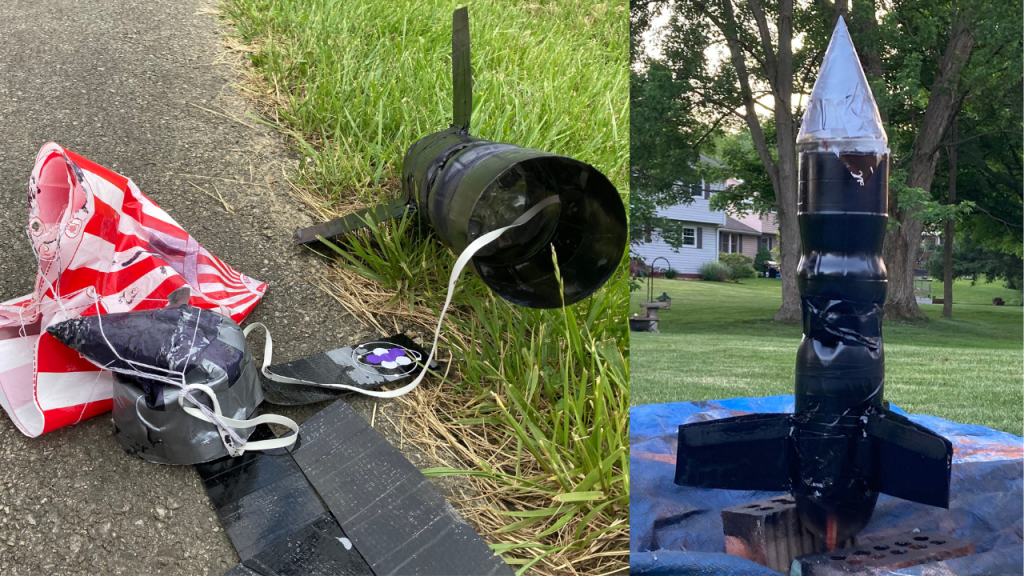
After a quick liftoff on May 24, 2022, Nucleus quickly suffered a loss of one of its upper air breaks and its fins began flexing uncontrollably. The rocket quickly ascended and then flipped into a nose dive. After smashing into the ground, it quickly became evident that the nose cone was unusable for any future flights.
Post Flight Repairs
Luckily, the only apparent damage to Nucleus was that the nose cone had been crushed. It’s incredibly easy to replace it, so the new one was ready to go the same day as the first launch. Also, we added popsicle sticks to the fins to help make them more rigid. This insured that we wouldn’t have an issue with them flexing again. The final edit was to remove the air brakes, as well as to create slots for the nose cone to be able to pop off more easily.

Flight 2
As soon as Nucleus lifted off, it became clear that its nose cone had been misplaced. It immediately fell into the body tube. The rocket ascended and then went into another nose dive. Unfortunately, the nose cone remained jammed in the body tube, causing a failure in parachute jettison. After recovering the rocket, it appeared that there was no serious damage to the nose cone, but there was a huge crack in the body tube that the parachute was stored in.

Flight 3
After quick repairs to the crack, we got back out to the launch pad about an hour after the first launch of the day. This had been one of our last attempts to launch before the equipment that we were using would become unavailable. The rocket shot off the pad and all seemed well. The repairs to the rocket had held up, and the rocket quickly hit apogee. After it looked like there was a chance for nosecone separation, the rocket aimed for the ground in another nose dive. This impact caused the nose cone to to crumple, making it unusable.

Although we were unsuccessful in our attempt to accomplish the original goal, we learned a lot from these three launches. This should be looked at as a stepping stone for bigger water rockets in the future. This project has been put on the back burner while we work on actively controlled projects, but we plan to revisit it in the future.